
School events · thoughtful planning
Plan a Halloween Lotería school event with your students in mind.
Start with the students, the school’s guidance, and the reason for gathering. The seasonal theme comes after that.
Leer esta guía en españolIf you have been handed the class-party sign-up sheet, you already know that “bring a game” can turn into a surprising amount of planning. A picture-matching activity can be straightforward to run, but the right version depends on the students, the setting, and the school’s rules.
Use this guide for an approved Halloween classroom activity, family evening, or school-club gathering. It is a planning guide, not a claim that a particular deck is appropriate for every age or school. A gentle autumn or everyday-vocabulary game may be the better choice.
In this guide
Product preview
Review the artwork before choosing a school game
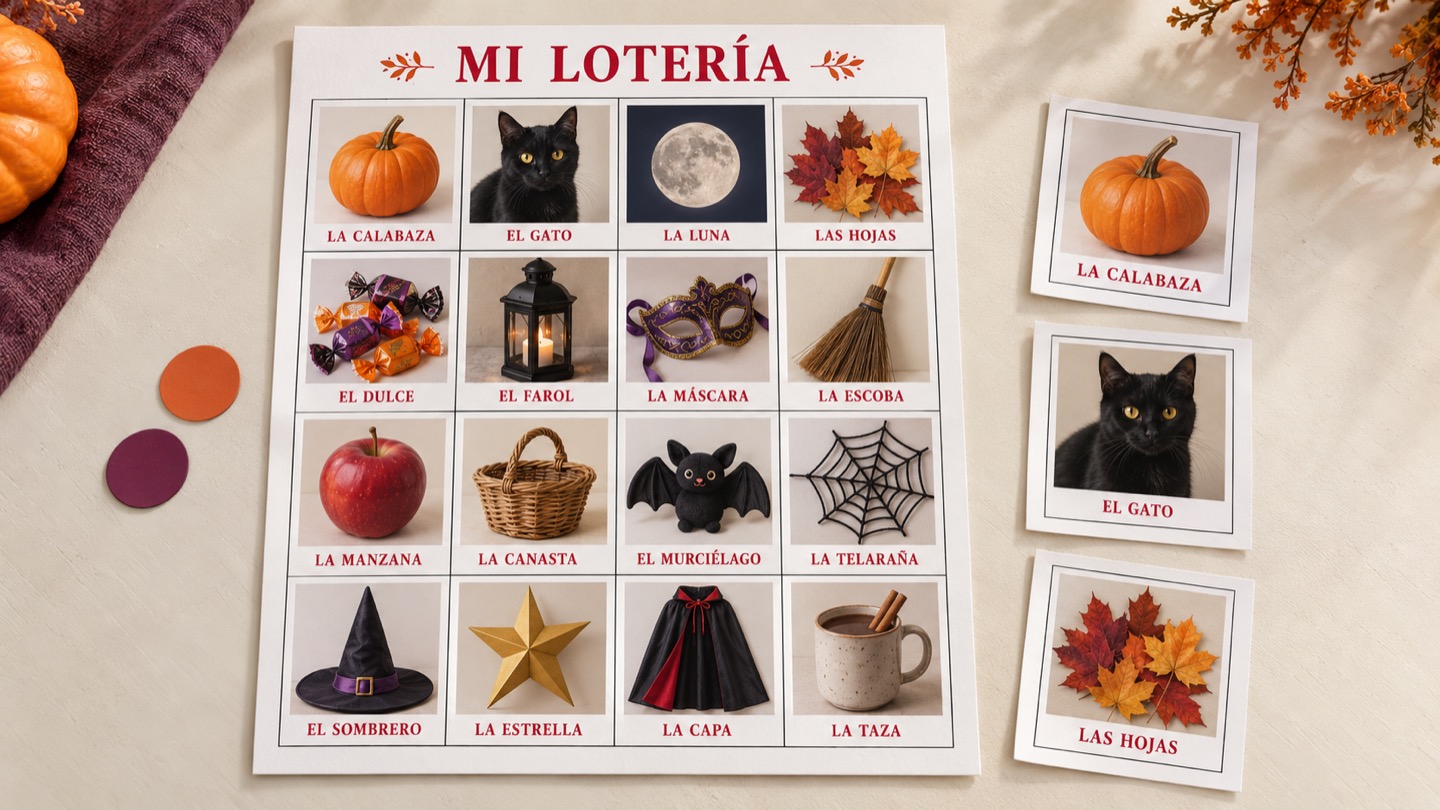
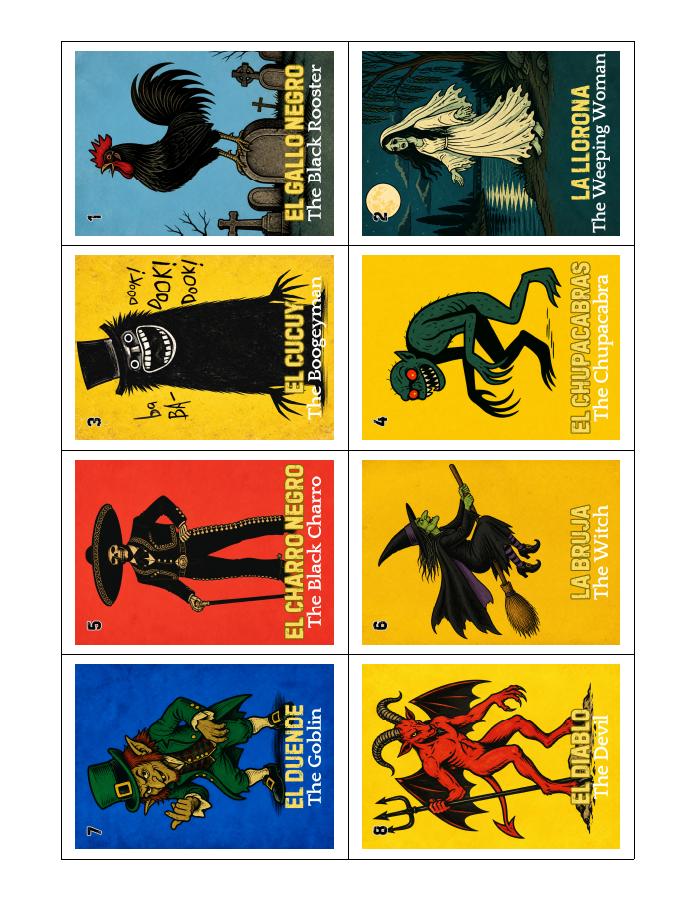
Start with permission, purpose, and a genuine choice.
Confirm with the teacher or event lead that Halloween activities are appropriate for this setting. Explain what students will see and do before asking families to participate. Follow the school’s process for approving materials, communicating with families, and providing alternatives.
Make participation optional without asking students to explain personal or family beliefs in front of classmates. Plan an equally welcoming alternative, such as an autumn picture game or a drawing station. Avoid making a costume, a purchase, or a prize competition the condition for joining the group.
- Name the purpose: a social activity, bilingual picture practice, or a family event.
- Check the theme and every image with the responsible staff member.
- Tell families what the activity includes and what alternative is available.
- Decide who will call the cards, support players, and organize materials.
Review the whole deck, not just the cover.
The ready-made Spooky Lotería is a themed product, not a school-approved curriculum or an automatically child-appropriate deck. Open the complete 54-card guide and inspect every image and label for your particular audience. Consider frightening imagery, supernatural or religious references, and anything students or families may find uncomfortable.
Do not solve an unsuitable card by removing it only from the calling deck: its picture may still appear on a board. If the finished set does not fit your event, choose a different game or create a separate custom project with suitable images and matching boards.
A non-scary fall game can be its own activity.
For a seasonal game without Halloween imagery, use original drawings or permitted photos of leaves, apples, rain boots, scarves, pumpkins, and familiar classroom objects. Choose items that make sense in your students’ lives rather than assuming everyone experiences the same weather or traditions.
You can also leave the season out and play with everyday school vocabulary. A custom Maker project uses images and names you provide; this is not a claim that a school-approved Halloween template is included. Have the teacher review the final cards and boards before printing.
Protect student privacy when making a custom deck.
Original object drawings can make a personal class game without identifying students. If you want to upload student work or photos, first follow school policy and obtain the permissions the school requires for that use. A photo taken at a school event should not be treated as automatic permission to upload or publish it elsewhere.
Keep full names, contact details, schedules, school IDs, and other identifying information out of the cards. Do not post identifiable children or unapproved student work in public galleries, social posts, or promotional examples. Review screenshots and print files before sharing them, and use the school’s approved distribution process.
Prepare enough materials and check the printout.
Count players or pairs before choosing your format. The ready-made Spooky digital edition includes 54 bilingual calling cards and 40 unique 5 × 7-inch boards in two PDFs. It is a separate purchase from the Maker; a printed Spooky game is another separate purchase. Check current product details and any delivery estimate rather than assuming a printed set will arrive before the event.
For a custom project, one Maker Pass covers one project, up to 100 boards, 30 days to edit and finalize from purchase, and three final saves. Replacing the final set uses another save; only the current final set is retained in the project. The third and last final save locks editing, even if time remains in the 30-day window. Downloading an already saved set does not use another final save. Check the current pricing page and your school’s purchasing process before buying.
Follow the PDF’s paper-size and layout instructions and test one page at actual size or 100%. Check that names and pictures are readable from the students’ seats. Choose markers appropriate for the group, such as easy-to-handle paper pieces, and keep the matching calling deck separate from the boards.
Demonstrate one turn, then keep the pace comfortable.
Show the winning pattern before starting: for example, one horizontal row. Give everyone a board or pair students who want to share. Shuffle the matching calling deck, draw one card, say its name, and show the picture. Demonstrate covering that image on a sample board.
For bilingual play, use a consistent order for English and Spanish and leave time to look at the image. Do not require a student to translate publicly to stay in the game. Check whether anyone needs a closer view, a repeated call, larger materials, or a quieter position.
Keep the called cards visible to the adult leading the game. When someone signals “¡Lotería!”, check the claimed pattern against those cards. Agree on ties before the round. Participation and taking turns can be the focus; you do not need prizes to make the activity worthwhile.
Keep Halloween and Día de Muertos distinct.
Halloween and Día de Muertos are different celebrations. Día de Muertos centers on remembering loved ones who have died; it is not a Spanish name for Halloween. Do not present a spooky game as a lesson that explains both.
If a separate Día de Muertos lesson is part of the school’s plan, choose resources and activities for that topic with the teacher. Avoid asking students to represent an entire culture or share a personal loss. A thoughtful event leaves room for different traditions, different comfort levels, and the choice not to participate.