
Community · a thoughtful social gathering
After the December 12 observance, a place at the table.
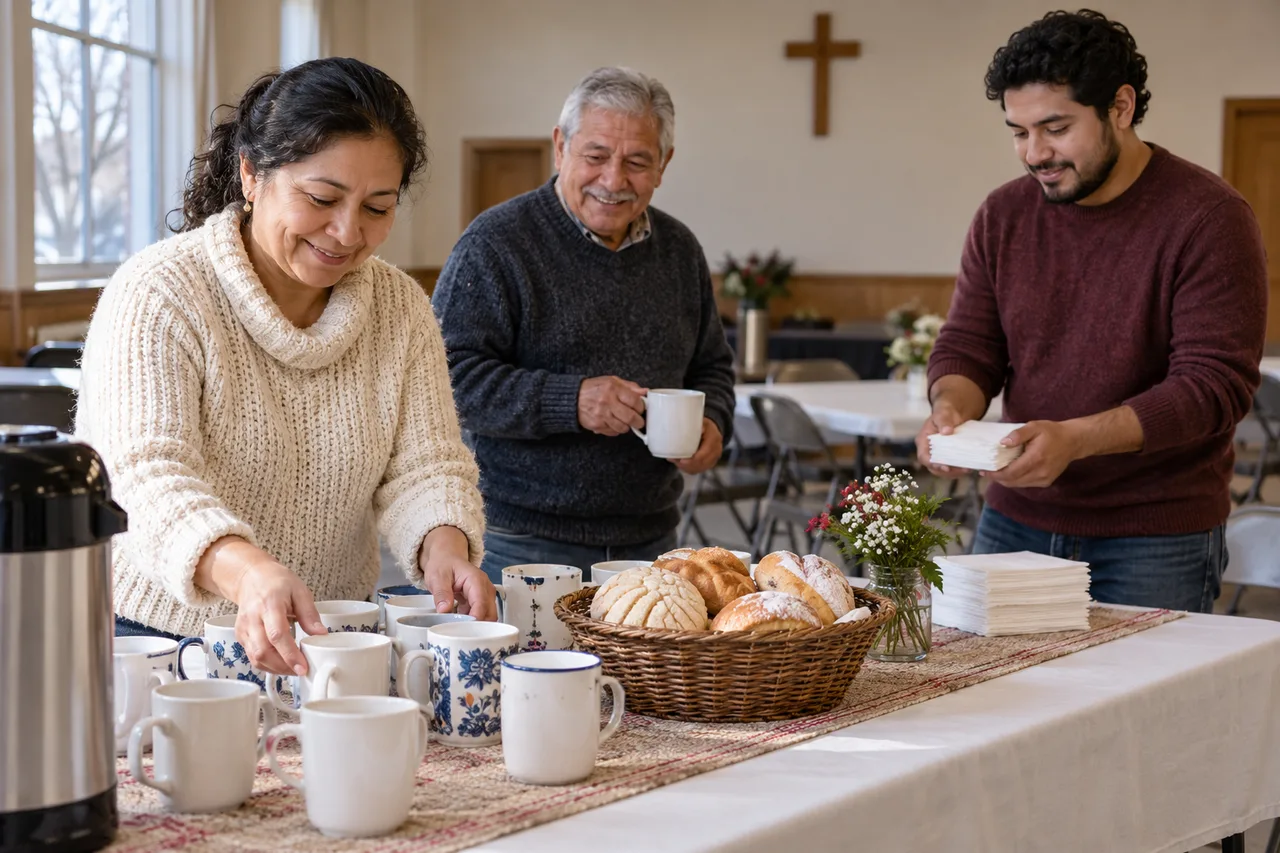
Before anyone asks about activities, someone has made coffee. Someone has found the extra chairs. A volunteer is watching the doorway for the neighbor who needs a little help getting inside. A community gathering begins with these small acts of welcome, not with a game.
Leer esta guía en españolDecember 12 is associated with the feast of Our Lady of Guadalupe. This guide is only for an optional social gathering after an observance, if the organizers welcome it. It is not a devotional activity, church program or religious endorsement.
You can make a custom Lotería about shared community life, using approved photos. The guide is free; finished digital access and printed orders are separate choices.
In this guide
An idea for your gathering
A little care before the doors open
Begin with the organizers, not a ready-made party plan
December 12 is the feast of Our Lady of Guadalupe, with local observances that vary by community. Ask the parish or community hosts whether a social activity belongs in their plans, where it can happen and when it should end. Do not assume a service, procession or devotional gathering needs a game.
If invited, place the activity in a separate social space and time. Keep sacred imagery, prayers and people’s beliefs out of jokes or prizes. Do not photograph worshippers or use a parish name or logo without permission. This is independent hosting advice, not an official religious resource.
Let welcome be the first activity
Someone may be new to the community, grieving, tired after volunteering or simply not interested in a game. Offer a seat, water and conversation without requiring participation. People should not need to explain their beliefs, language skills or immigration status to join the social gathering.
Ask privately about practical access needs. Leave walkways clear, lower background music and make pictures easy to see. Let people play in pairs or watch. Choose markers appropriate for the ages attending and supervise young children. A quiet table can be as welcoming as a busy one.
Make the cards about the life you share
Use your own or licensed images and get permission before including identifiable people. A 4 × 4 board needs at least 16 distinct cards; a 5 × 5 board needs 25. Keep the design simple enough to recognize from across the table.
Sixteen starting ideas: The Bread / El Pan, The Coffee / El Café, The Table / La Mesa, The Chair / La Silla, The Garden / El Huerto, The Book / El Libro, The Park / El Parque, The Library / La Biblioteca, The School / La Escuela, The Music / La Música, The Flowers / Las Flores, The Kitchen / La Cocina, The Neighborhood / El Barrio, The Team / El Equipo, Friendship / La Amistad and Community / La Comunidad. These are prompts, not included artwork.
Let the hosts approve pictures and wording before generating boards. Leave private stories, addresses, documents and sensitive personal details out of the deck. You do not need sacred images to make a game meaningful.
One gentle round, with both languages welcome
Try: “We’ll read the name in Spanish and English, then show the picture. Mark it if it’s on your board. You’re welcome to watch or share a board.” Demonstrate one call and show the winning pattern before beginning. Nobody needs to translate publicly or pronounce every word perfectly.
Keep one matching calling deck with its boards. Agree on ties, pause between calls and retain drawn cards for checking a winning pattern. Plan one round first. If the hosts need the space, stop at a natural break rather than trying to fit in another activity.
Protect the volunteers’ time and the community’s budget
Decide who will gather permitted photos, review names, test a print and call the game. One small finished project is more useful than a large deck nobody has time to check. Keep participation free and do not add paid entries, cash pools or betting to this gathering plan.
Eligible education or nonprofit organizations can apply for discounted Maker access. Approval is required; a parish email address alone is not a promise of eligibility. Once approved, sign in and compare the project-pass and eligible membership options. Ask about access before buying rather than assuming a later refund or automatic discount.
Free draft, digital access or a printed order?
Create and preview a Maker draft free before deciding how to finish it. A new project pass covers one project with up to 50 boards bearing the Maker logo, 30 days from purchase to edit and three final saves. An active paid membership allows unlimited projects, up to 100 boards per project and unlimited edits and final saves with logo-free exports while active. Older passes keep their original benefits.
If you only need the physical game, order 50 or 100 custom boards with their matching calling deck from a saved free draft without first buying a pass or membership. A physical order does not unlock paid digital downloads. Printing, shipping, AI credits and ready-made shop downloads are separate options. Review current prices and the estimate for your order; this guide does not guarantee arrival before a celebration.
Finish with the same care you started with
Open the final saved files and check every image, name, board count and page size. Print one test page before the complete set. Keep the deck and boards together so a future volunteer does not have to guess which pieces match.
Make photos of the social gathering optional too. Thank the people who prepared, help clear the tables and follow the hosts’ closing time. A good activity leaves room for the purpose of the day and less work for whoever has the keys.