
December · your people, your way to gather
After the ponche, make room for one more round.
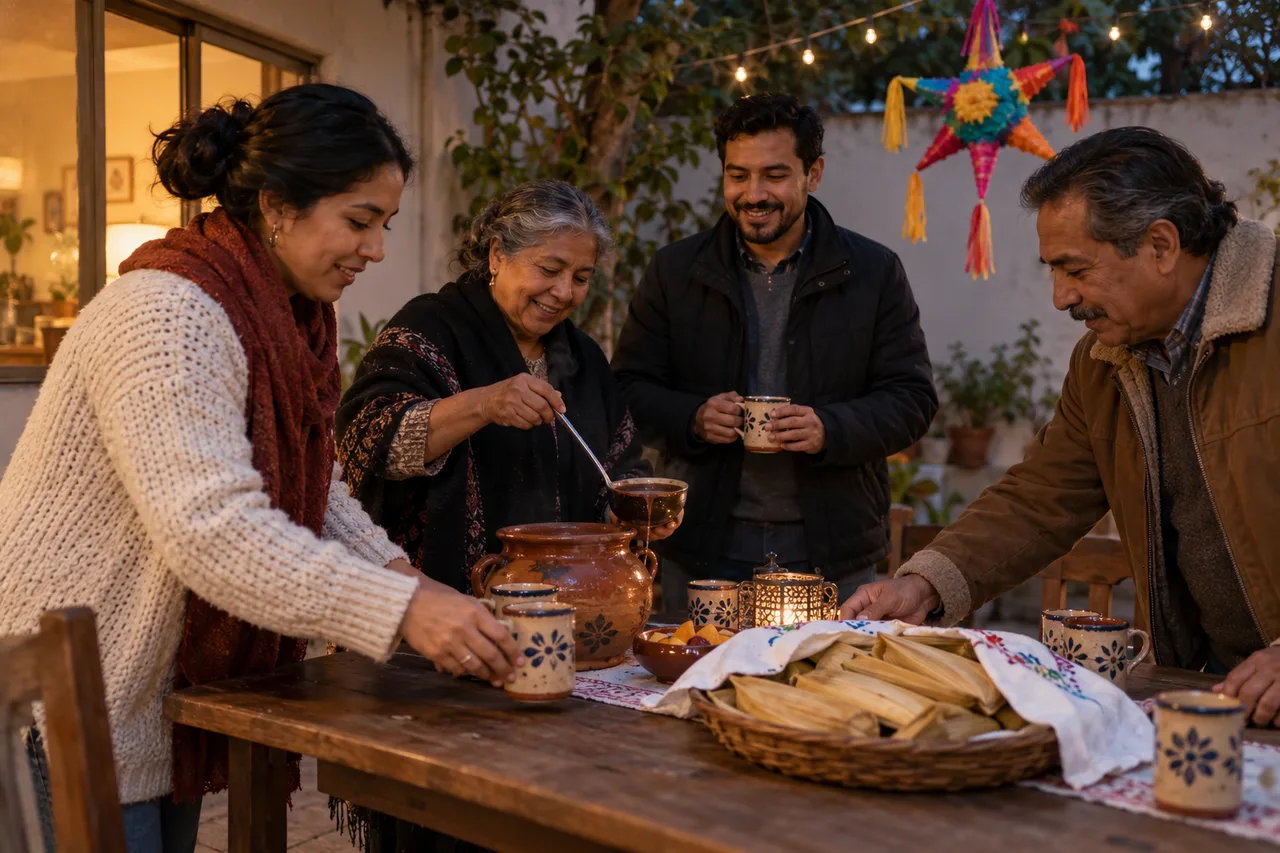
The mugs do not match. Someone brought more tamales than anyone asked for. The cousin who said “just a little while” is pulling up another chair. Your posada already has what it needs: people who want to stay. A short game can give them another reason.
Leer esta guía en españolFor a posada, choose one matching calling deck and enough boards for each player or pair. Explain the winning pattern, show every card and leave space for both Spanish and English.
This free guide helps you host. It does not include printable game files. You can choose our original Navidad Latina edition or build a personal version with your own photos.
In this guide
An idea for your gathering
A small beginning for a good evening
Let the game fit your posada
Las Posadas traditionally take place December 16–24. Some families and parishes include a procession, prayer or singing; other gatherings are social celebrations. Ask the host where a game belongs instead of treating every posada as the same party.
If there is a religious observance, plan the game for the social time afterward. Keep sacred images and practices out of joke prompts. Nobody should have to explain their beliefs, join a prayer or play a game to feel welcome. Let the people hosting set the tone.
A ready-made Christmas game or your own December stories?
Navidad Latina is our original bilingual Christmas Lotería. Preview the actual card guide before choosing it: holiday humor that works with cousins might not suit a parish, school or mixed-age group. Its calling cards belong with its own boards, not a Thanksgiving or Spooky set.
A custom deck can focus on your gathering: the borrowed chairs, the neighbor’s recipe, the annual sweater photo or the person who always brings extra containers. Use your own or licensed images and get permission for faces and nicknames. A personal game does not have to make anyone the punchline.
A simple plan between food and goodbyes
Set aside about 30 minutes, but let the conversation decide how many rounds fit. These are planning suggestions, not guaranteed round lengths. If the food is ready or the host needs the table, pause the game.
- Before guests arrive: count players or pairs, sort the matching boards and deck, and make one test print if using digital files.
- First five minutes: show one card, practice marking it and point out the winning pattern.
- Next 15–20 minutes: play a round or two with a steady calling rhythm.
- Last few minutes: check winners against the drawn cards, thank the caller and leave time to help clear up.
Two languages, one table
Try: “I’ll read both names and show the picture. If it’s on your board, mark it. We’ll practice one together.” Read the labels as printed, pause and hold the card where the farthest seat can see. A friend can share calling without becoming the room’s permanent translator.
Show the pattern before each round: for example, one complete horizontal row. Agree on ties before beginning. When somebody calls “¡Lotería!”, compare the winning pattern with the cards already drawn. New players can watch a round or share a board.
Sixteen photo ideas, without turning your family into a stereotype
A 4 × 4 board needs at least 16 distinct cards; a 5 × 5 board needs 25. Start with pictures people recognize at a glance. These are ideas for your own photos, not artwork supplied with this guide.
Try El Ponche, El Tamal, La Taza, La Bufanda, La Piñata, El Listón, La Mesa, La Silla, El Suéter, La Foto, La Cocina, El Postre, La Música, La Luz, La Visita and El Abrazo. Change any name to match your family’s words. Not every household has the same traditions.
Choose clear crops, check spelling and preview the smallest labels before generating boards. Avoid jokes about immigration status, money, bodies or family conflicts. The best card often starts a story without making someone uncomfortable.
Finish the set in the format you actually need
Start and preview a Maker draft free. A new one-time pass covers one project with up to 50 boards bearing the Maker logo, 30 days from purchase to edit and three final saves. An active paid membership allows unlimited projects, up to 100 boards per project and unlimited edits and final saves with logo-free exports while active. Older passes keep their original benefits.
You can also order 50 or 100 custom printed boards and their matching calling deck from a saved free draft, without first buying digital access. A physical order does not unlock paid digital downloads. Ready-made shop files, custom printing, shipping and AI credits are separate. Check the current options and your order’s delivery estimate; this guide does not promise arrival before a posada.
The host’s last check
Keep drinks beside the boards, use age-appropriate markers and supervise young children. Leave clear walkways and enough light to see pictures. A small prize is optional; taking a turn choosing the music is enough.
Before printing everything, open the final saved files and check board count, image quality and page size. Put the matching deck and boards in one folder or envelope. Then join the table. The game should make hosting feel lighter, not turn your posada into another project.