
Family stories · cultural learning · your own images
Celebrate Latino heritage with a Lotería shaped by your own stories.
A recipe card, a familiar expression, the sound of an instrument: heritage can begin with something small enough to hold, and meaningful enough to ask about.
Leer esta guía en españolA heritage Lotería works best when it starts with “What matters to our people?” rather than “What belongs on a Latino checklist?” Let contributors choose the objects, places, words and skills they want to share. The result can be playful without flattening very different experiences into one theme.
Lotería is the format you are choosing; it does not represent every Latino culture or family. Invite curiosity, leave room for differences and make sharing optional.
In this guide
Editorial illustration
From your pictures to your own game
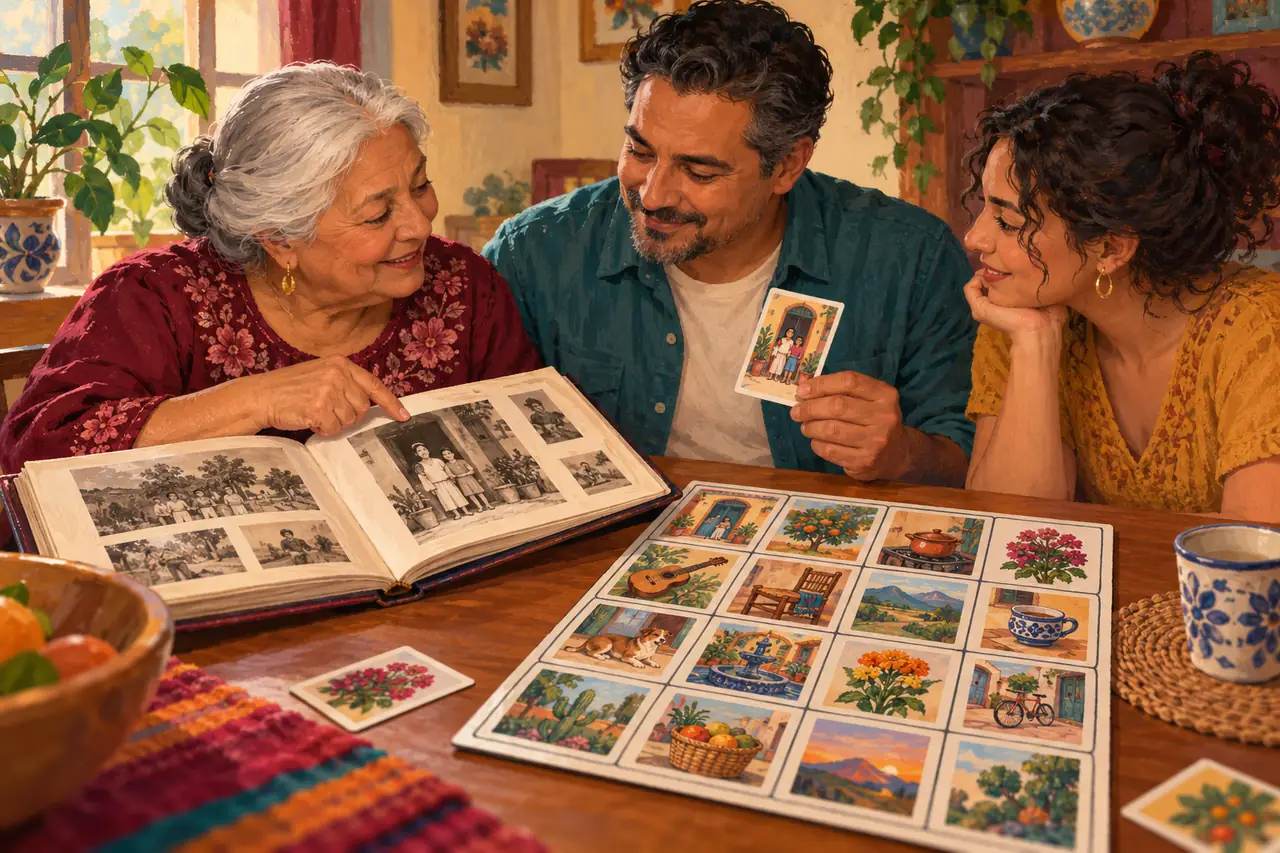
Start with whose stories are in the room
Ask contributors how they describe their family, community and language. Latino, Hispanic and other identity terms are not interchangeable for everyone. Use the words people choose for themselves rather than assigning a label based on a surname, appearance or language.
Make room for different countries, regions, generations and experiences, including Afro-Latino, Indigenous and mixed backgrounds when contributors choose to share them. No one needs to speak Spanish, explain a whole country or prove an identity to take part. Someone may prefer to contribute an everyday object rather than a family story.
The Library of Congress family-history guide suggests asking before recording relatives. Recording is optional here: the contributor’s own explanation matters more than a generic list of symbols.
Offer prompts people can answer, adapt or skip
Ask for one shareable detail, not a life story. Tell contributors whether the cards will stay in the classroom, be used at a family gathering or be shared more widely. Let them approve the image and wording. A person can participate without providing a portrait, recording, full name or private history.
- An object someone taught you to use: what makes it useful?
- A word or expression your household enjoys: when do you say it?
- A recipe someone is comfortable discussing: what is your family’s version?
- A game or activity you learned from another person: what do you remember?
- A skill you practice now: who helped you begin?
- A place that feels familiar: what ordinary detail would you draw?
- A sound or instrument you associate with a good memory: why that one?
- A new tradition your household has made: how did it start?
Turn a specific memory into a clear card
Imagine a contributor chooses a wooden spoon because someone taught them a recipe with it. The card might be “La Cuchara / The Spoon,” using their own permitted photo. A separate note can explain the story in their approved words.
Other possible subjects include a plant, a sewing tool, a handmade object, a notebook or a musical instrument. Ask what the subject means to the contributor. Do not replace their explanation with a stock cultural association.
Avoid copying album covers, recognizable commercial characters or artwork found online without permission. An original drawing of an object often works better at card size than a crowded family photograph. When someone prefers privacy, choose a non-identifying image or leave that story out.
Keep the language people use, with room for explanation
A short label can be bilingual if that helps your players: “La Planta / The Plant” is easier to read than a paragraph. Keep names, accents and regional terms as contributors prefer, then add a short explanation on a caller sheet when necessary.
Spanish and English are not the only languages in Latino communities. Do not invent a translation or pronunciation for a language you do not know. Invite a willing speaker to review the wording, or retain the original name with a clear description. Nobody has to serve as the room’s translator.
Let two cards differ when the stories differ. Different recipes, names or practices are a reason to ask a respectful question, not to vote on which family is more authentic.
A classroom activity with a clear learning goal
Try the goal “Describe one object and explain why it matters to its contributor.” Before class, offer an optional prompt and a non-personal alternative, such as drawing an everyday object. Follow school consent rules. Do not require family interviews, photos or identifying information as homework.
In a 45-minute workshop, spend 5 minutes explaining respectful participation, 10 choosing or drawing a subject, 10 drafting a label and short description, 10 sharing in optional pairs, and 10 reviewing suggestions for the class deck. The educator can prepare the digital project afterward; students do not need to share an account.
For a 4 × 4 game, assemble at least 16 distinct cards. A 24-card class deck provides more variety; 5 × 5 boards need at least 25. During a later game, use a few approved stories between rounds. Assess clear description and respectful listening, not cultural knowledge, family disclosure or fluency.
Use it for Heritage Month, and keep the stories going
In the United States, National Hispanic Heritage Month runs from September 15 through October 15, as documented by the Library of Congress. This guide is useful for planning that observance, but the activity does not need to end with it.
Use a family gathering, a language unit or an ordinary community afternoon as another starting point. Revisit the deck when contributors want to add something new. Keep captions specific to the people who approved them, rather than presenting one classroom’s choices as a complete picture of Latino heritage.
Make the deck, review it together, then choose access
Start a free Maker draft. In Cards, upload permitted images, add the reviewed names and check every crop. In Board Design, choose the grid, title and readable colors. In Downloads, generate the allowed board quantity, inspect the cards and boards, and save a final set before downloading. Ask contributors to review before the final save, not after printing.
A new pass covers one project, up to 50 boards with the Maker logo, 30 days from purchase and three final saves. An active paid membership supports unlimited Studio projects, up to 100 boards each, unlimited edits and final saves, and logo-free exports. Check the nonprofit page for approved educational pricing; approval is not automatic.
You can also order a printed set from a saved free draft without purchasing a digital pass first. Review the physical options, shipping and delivery timing. Printing, optional AI credits and ready-made shop downloads are separate purchases; a printed order does not automatically unlock digital downloads.
Keep these notes with the project
Copy the prompts into your planning document. Keep permission records private; include only the approved story text with the game.
- Our learning or gathering purpose: ____________________
- Participation choices and non-personal alternative: ____________________
- Card / image owner / intended audience / permission: ____________________
- Preferred label / language review / approved description: ____________________
- Project owner / board quantity / digital or printed format: ____________________
- Contributor review and test-print date: ____________________
Sources and references
- Library of Congress: National Hispanic Heritage Month Source for the U.S. September 15–October 15 observance dates.
- Library of Congress: Family History for Kids, Oral Histories Further reading on collecting family stories with permission.